Poly-B Piping in BC Homes: Risks, Replacement Cost, and What Buyers Should Do
Shopping for a home built in the 1980s or early 1990s in Metro Vancouver? Before you fall in love with the kitchen, open the utility-room door and look at the pipes. If they are flexible, grey, and stamped “PB2110”, the home has Poly-B piping — one of the most common, and most negotiable, issues I run into with buyers.
Poly-B is not a reason to walk away from a good home. It is a reason to go in with your eyes open, a real quote in hand, and a plan. Here is what it is, what it risks, what it costs to replace in the Lower Mainland, and exactly what to do if the home you want has it.
What is Poly-B piping?
Poly-B (polybutylene) is a flexible grey plastic pipe that builders used for household water supply lines from the late 1970s to the mid-1990s — in Metro Vancouver, most often in homes built between 1985 and 1997. It was cheap, quick to install, and everywhere: houses, townhouses, and condos across Vancouver, Burnaby, Richmond, the North Shore, and the Tri-Cities are full of it.
It has since been removed from the plumbing code for new construction, because decades of experience showed it does not age the way everyone hoped.
How to spot Poly-B
You do not need to be a plumber to spot it. Look where the water lines are visible — the utility room, around the hot water tank, under sinks, and in an unfinished basement or crawl space:
- Colour: dull grey (occasionally beige, blue, or black), flexible rather than rigid
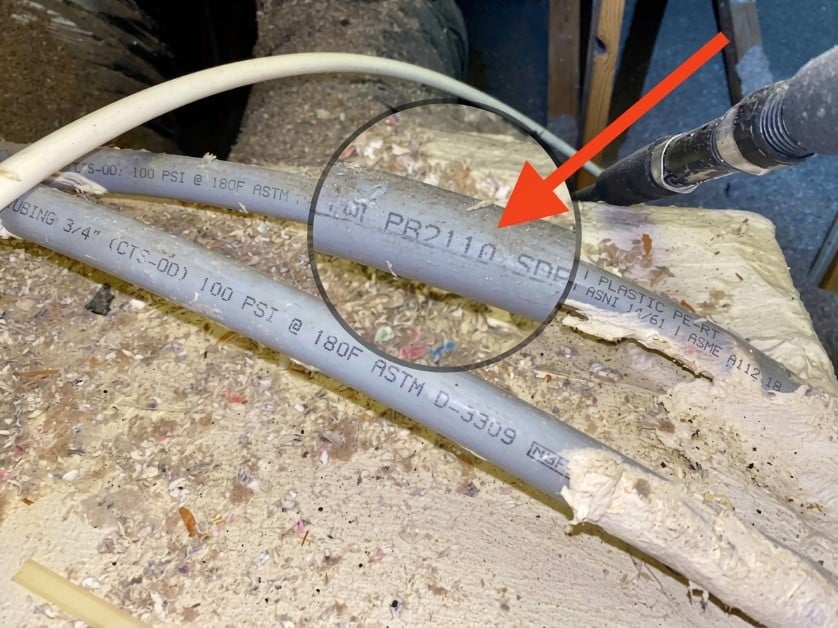
- Markings: “PB2110” or “PB-2110” printed along the pipe, sometimes the brand name QEST
- Fittings: copper crimp rings or grey plastic fittings at the joints
- The build years: a home built between 1978 and 1995 that has never been repiped is a prime candidate
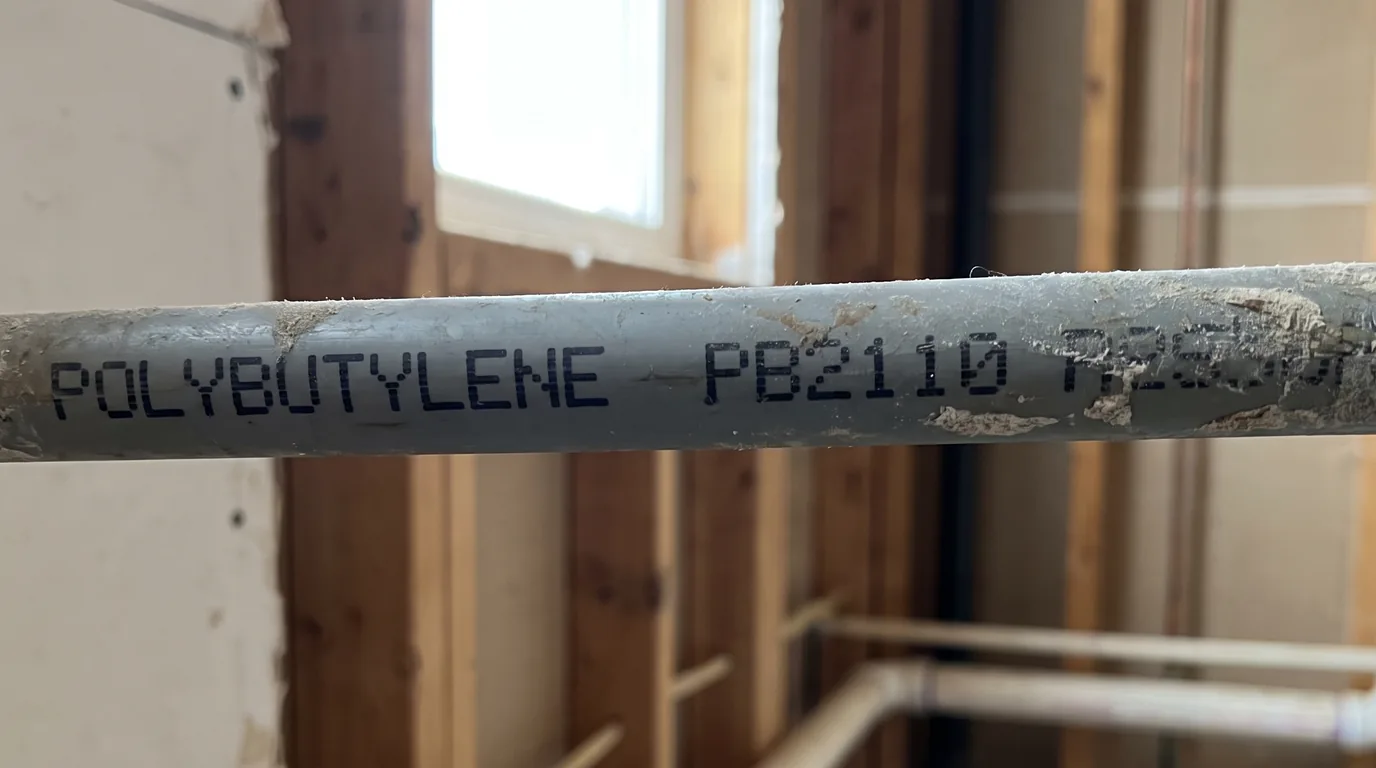
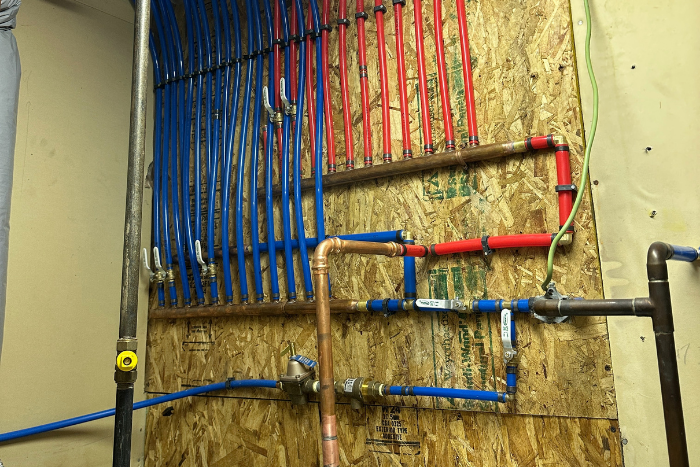
One warning: modern PEX pipe is also plastic, but it is usually white, red, or blue and stamped “PEX”. If you see red and blue lines, the home has likely already been repiped.
The real risks: leaks, water damage, and insurance
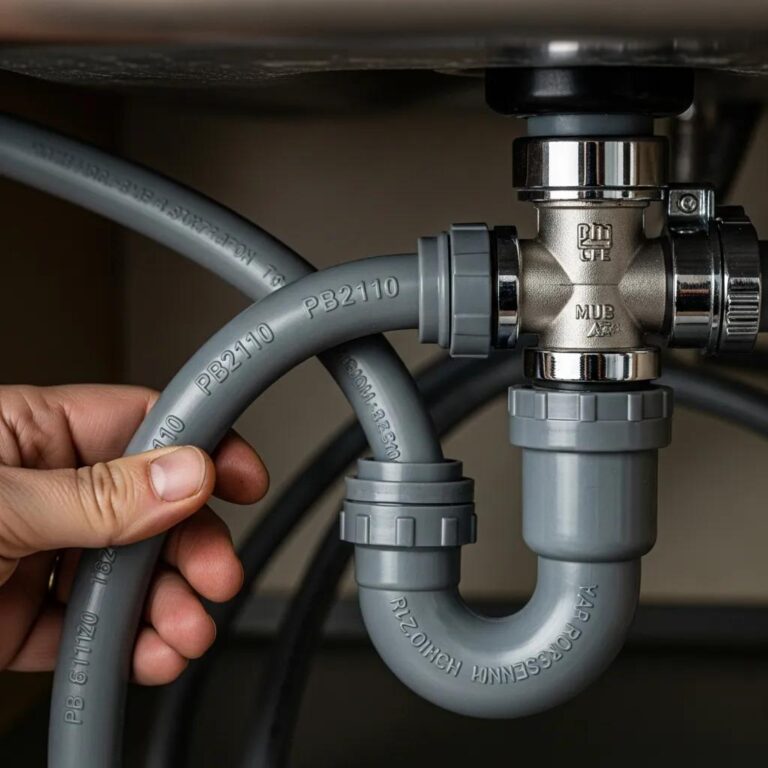
Poly-B fails from the inside out. The chlorine in treated municipal water slowly attacks the inner wall of the pipe, causing flaking and micro-cracks. The material turns brittle — hot-water lines, especially near the water heater, usually go first — and the grey plastic fittings degrade as well. The result is a pipe that can look fine from the outside while it is quietly wearing out.
In practice, the risks are:
- Hidden leaks. Most Poly-B runs inside walls and floors, so a slow leak can soak framing and grow mould long before anyone sees a stain.
- Sudden bursts. A brittle pipe or fitting can give way without warning, and a single burst can cause tens of thousands of dollars in water damage.
- Insurance trouble. This is the one that surprises buyers most. Many BC insurers now surcharge Poly-B homes, restrict water-damage coverage, decline to renew, or give owners 12 to 24 months to replace the piping. Insurers will not pay to replace pipes that still work, and a slow leak can be denied as “wear and tear”.
The balanced view: homes with Poly-B sell every week in Metro Vancouver. It is a known, priced-in issue — as long as you actually price it in.
What it costs to replace Poly-B in Metro Vancouver
The fix is a full repipe: a licensed plumber replaces every Poly-B supply line with modern PEX (copper is the other option), under a plumbing permit. Most homes take two to seven days, the water is only off in stretches, and you can stay in the home throughout. Current Lower Mainland ranges:
- Condo: roughly $4,000 to $12,000, depending on bathrooms and strata rules
- Townhouse: roughly $8,000 to $14,000
- Typical detached house: roughly $10,000 to $20,000
- Large or custom homes: $20,000 to $35,000 and up
When you compare quotes, ask what is included. Most repipe quotes include opening and patching drywall but not repainting; permits, inspection, and taxes should be spelled out in writing.
Buying a home with Poly-B: what to do
- Spot it early. Build year plus a peek at the utility room tells you most of what you need before you write an offer.
- Use your subject period. Have the home inspector confirm the piping, then get a written repipe quote from a licensed plumber — a real number, not a guess.
- Check insurance before removing subjects. Call an insurance broker while you still have subjects on. Confirm the home is insurable, what the premium is, and whether the insurer sets a replacement deadline.
- Negotiate with the quote in hand. A price adjustment, a credit, or the seller repiping before completion are all on the table — and far easier to agree with a written quote attached. (My guide to the cost of selling a home in Vancouver shows how these numbers usually move a negotiation.)
- In a condo, read the strata documents. Check who is responsible for in-unit piping, and whether the building has a repipe project or special levy coming.
- After you move in, plan the repipe. Book it before your insurer’s deadline, learn where the main shut-off valve is today, and consider an inexpensive water-leak sensor near the water heater in the meantime.
Selling a home with Poly-B
Disclose it. Known Poly-B and any leak history belong on the Property Disclosure Statement, and buyers’ inspectors will find the grey pipe anyway. Then choose your strategy: replace it before listing and remove the objection entirely (it also widens your buyer pool, because every buyer’s insurer is asking the same question), or price the home with the repipe cost in mind and hand buyers a written quote. Either way, it should never be a surprise at subject removal.
Found grey pipes in a home you are looking at — or in the one you live in? Call or text me at 604-889-1640 and I will help you work out what it means for the price, the offer, and the plan. You can also read how I work with buyers.